

Consumer sentiment has reached a record low for the second month in a row. Lower than during the pandemic and the 2008 financial crisis. Unlike during those times, there is no single large event to point to as the cause of the negativity.
Let’s look at several economic numbers, how they’ve changed since 2024, and briefly discuss why they matter.
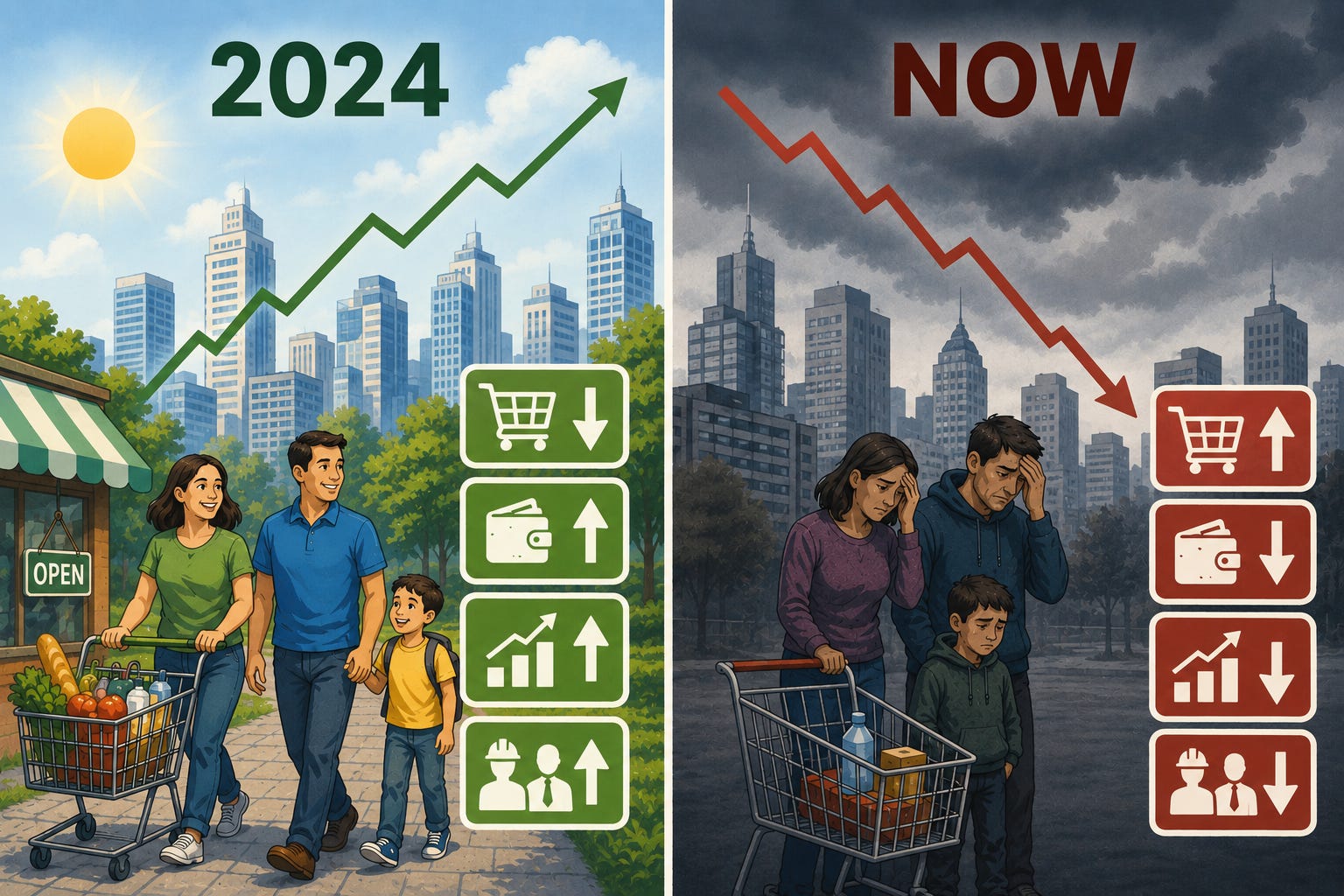
One of the metrics we hear about the most is Inflation, which is the change in prices of goods and services over time. Inflation has risen a decent amount, from 2.9% in 2024 to 3.8% today. But what level of inflation is good and what is bad?
It depends. If inflation is at 4%, but your wages increase by 5%, you are better off even though prices are rising faster. That’s why we look at wage gains.
In 2024, wages grew 3.9%. They grew faster than inflation, and the lowest earners were seeing the biggest gains. Another way to put it is that real wage growth is 1%. The term “real” means it is what wage gains were after inflation was accounted for. 3.9% wage growth - 2.9% inflation = 1%.
In 2026, wage gains are 3.6%. They are growing more slowly than inflation, and the lowest earners are seeing the smallest gains. Workers were getting ahead, but now they’re falling behind.
One of the most talked-about aspects of inflation right now is oil prices, which drive up diesel and gas prices. Gas prices, as reported by AAA, have risen from around $3 per gallon in December 2024 to $4.29 per gallon today. Prices have been falling for a couple of weeks amid hopes of a peace deal with Iran, but negotiations are facing setbacks, and oil supplies are dwindling.
All of this is hitting households hard as the personal savings rate, the percentage of disposable income that is saved instead of spent, has dropped to just 2.6%, as low as during the height of inflation during the pandemic recovery. More Americans are using credit cards for necessities, and the credit card delinquency rate is the highest since the 2008 financial crisis.
Another term we often hear is GDP Growth, which is actually Real GDP Growth, meaning inflation is factored in. Gross Domestic Product is the total value of all goods and services produced in a country. Real GDP Growth is the rate of growth of GDP. This matters because a faster-growing economy typically means more jobs, higher pay, and greater opportunity, while slower growth means the opposite.
GDP grew by 2.8% in 2024. It has grown only 1.6% as of the first quarter of 2026. We can see how this slowdown is affecting workers by looking at jobs.
The unemployment rate in 2024 was 4%. It has since risen to 4.3%. Jobs added per month dropped from over 120,000 in 2024 to 76,000 this year. All of which has resulted in there being 6.8 million job openings for 7.2 million unemployed in March
That situation was reversed in 2024 when there were 7.6 million job openings for 6.9 million unemployed. That means we had a job openings-to-unemployed ratio of 1.10, but it had fallen to 0.94. Having more jobs than job seekers means companies have to compete more for workers, which increases wages.
Today’s Job Openings and Labor Turnover (JOLT) showed a large increase in job openings in April, bringing the total openings up to 7.6 million, but the vast majority of those new openings are white-collar jobs. Blue-collar jobs continue to decline.
GDP also matters for the nation’s debt. The better the debt-to-GDP ratio, the better the country’s financial position. Unfortunately, as GDP growth has slowed, the debt has surged, rising from $35.5 trillion to $39 trillion. In 2024, the ratio was 120.25%. The current debt-to-GDP ratio is 122.5%. Looking at only publicly held debt, the debt-to-GDP ratio has increased from 96.8% to over 100%, a level we haven’t seen since the WWII era.
We are now spending over $1 trillion each year on the interest on the national debt. That doesn’t reduce the debt, only maintain it.
Given that information, it shouldn’t be too surprising that the deficit has risen from $1.8 trillion to a projected $2 trillion this year. The surprising part is that this increase came as financial assistance programs, education, and foreign spending through agencies like USAID were cut, while tax cuts for the wealthy and corporate loopholes were larger than the budget cuts.
Those cuts have increased the number of uninsured Americans from 27 million to a projected 30 million. A greater number of uninsured puts an economic strain on the nation as more burden falls on emergency rooms, medical debt and bankruptcy rise, and more people miss work and rely on federal assistance due to medical issues.
Overall, the economy is worse today, particularly for working-class Americans. The worst part is that not only is Congress doing nothing to fix it, but it is also actively making it worse through legislation like the One Big Beautiful Bill, allowing broad tariffs to increase costs and reduce jobs, and not stopping the illegal war in Iran, which has supercharged inflation.
Workers deserve a Congress that works for them, and they have the chance to make that a reality in November.
The 2025 Economic Slowdown

The final numbers of 2025 have arrived, and they are not good. Last year saw a significant economic slowdown, affecting jobs, GDP growth, savings, the deficit, and the lives of millions of hard-working Americans.