

Oil built the modern world. It fueled America’s industrial revolution, created the automobile assembly lines, and powered the victories of World Wars I and II. Dominating the oil markets helped grow America’s prosperity and influence on the world stage.
Those days are coming to an end.
Oil demand in highly developed nations peaked twenty years ago. Demand in developing nations is expected to peak in just a few years. Oil is becoming a commodity of the past, and America is stuck thinking about energy as if it were still 1975.
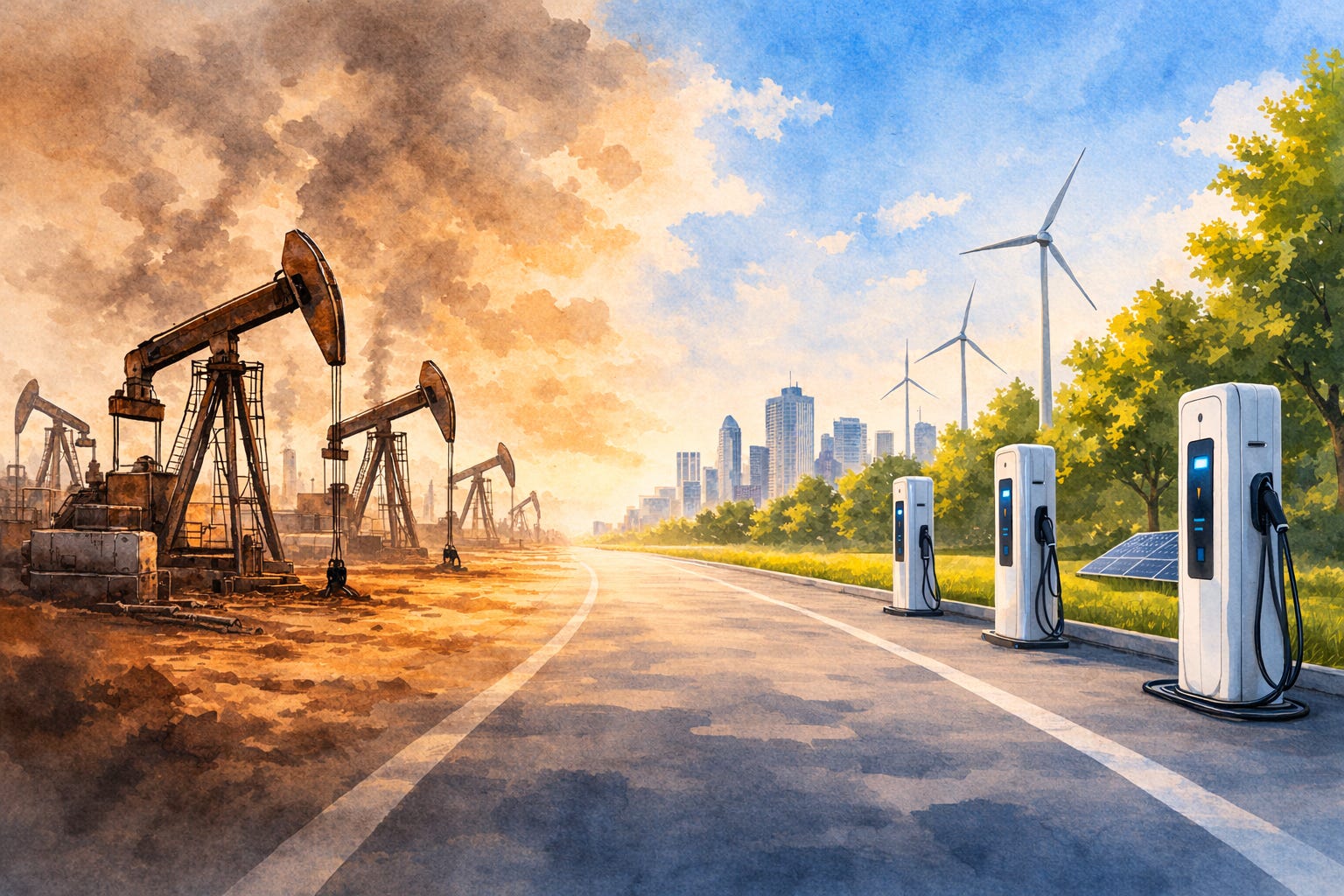
Unlike other fossil fuels, oil isn’t primarily used to generate electricity for homes and businesses. It is used mostly in transportation, accounting for about two-thirds of demand. Cars and light trucks make up the largest share of that demand, and they are also experiencing disruptive change.
The United States has been relatively slow to adopt electric vehicles. They account for about 10% of new car sales. Europe has moved faster at roughly 22%, while China has gone all in, with around half of the new vehicles sold being electric. This trend is expected to accelerate worldwide.
Electric vehicles are already reshaping oil markets. Analysts estimate that every one million EVs on the road reduces oil demand by roughly 15,000 barrels per day. Over 20 million new EVs were sold last year.
If all road vehicles in the United States were to transition to electric, US oil demand could fall by roughly 40%. That will take decades, but the steady shift from gasoline and diesel to electric vehicles will continue to reduce oil consumption, just as it has already in parts of Europe and Japan.
Most of the remaining growth in global oil demand now comes from developing economies. Those nations are already embracing electric vehicles, with sales in 2024 doubling from the year before.
After transportation, the next largest uses of oil are petrochemicals and plastics. Most plastics today are not recycled, but new chemical technologies aim to change that. Researchers are also developing plant-based plastics made from materials such as corn, sugarcane, and even algae. Some petrochemical production has already shifted from oil to natural gas.
In other words, alternatives are emerging across nearly every major use of oil, and the largest sources of demand are also seeing the fastest change.
America may be moving away from oil more slowly than some other nations, but global demand still determines the health of the American oil industry. Oil is a globally traded commodity, so supply and demand in other parts of the world influence prices everywhere. There is also another complication: not all crude oil is the same.
The United States produces more oil than it consumes, but much of that production is light sweet crude. Most American refineries are designed to process heavier crude oil. As a result, the U.S. exports large amounts of the oil it produces while importing the types its refineries require. That means America cannot insulate itself from global oil markets simply by producing more oil domestically.
Changing demand and a prolonged period of relatively low prices have made new drilling investments less attractive. Bringing a new rig online can take years, and with long-term demand projections becoming more uncertain, companies are hesitant to commit billions of dollars to new production.
During the shale boom of the 2010s, American oil companies collectively lost hundreds of billions of dollars chasing growth. Today, many companies are prioritizing shareholder returns over aggressive drilling expansion.
Despite campaign promises to “drill, drill, drill,” there are actually fewer oil rigs operating today than when Trump took office. Companies have instead focused on improving technology to increase output from existing wells while older rigs are retired.
The administration opened land in the Arctic National Wildlife Refuge for drilling bids last year and in Alaska’s Cook Inlet this year. Neither effort attracted a single bid.
The United States even launched a military operation that removed Venezuela’s president, Nicolás Maduro, from power, a move closely tied to the country’s massive oil reserves. Yet American corporations have shown little interest in doing business there. Exxon told the president that Venezuelan oil was “uninvestable.”
America’s continued obsession with oil reflects an economic mindset stuck decades in the past.
The broader fossil fuel era is beginning to wind down. Coal use in the United States has already declined dramatically. Global oil demand will plateau within a few years. Natural gas will remain important for longer, but even that market faces growing competition as renewable energy becomes the cheapest source of new electricity generation.
If the United States wants to remain the world’s leading economic power, it must lead the industries that will dominate the next generation of global markets:
Renewable energy
Electric vehicles
Batteries and energy storage
Robotics and automation
Rare earth minerals
China has invested heavily in these industries for years and now holds leading global positions in solar panels, battery manufacturing, electric vehicles, and rare-earth processing. If America waits too long to compete in these markets, catching up will become far more difficult and expensive.
It is time for America to invest in the industries of the future rather than chasing those of the past.
The Fragile US Economy

The US economy has barely managed to chug along in 2025, but lying beneath the surface is a single thread holding it all together. If that string snaps, the economy goes down with it.