

One bad accident. One illness. One twist of fate. That’s all it takes to unravel a lifetime of hard work, saving, and doing everything right.
It can happen to any one of us.
A medical emergency can spiral into crushing debt, job loss, and financial ruin almost overnight. In the United States, medical debt remains the leading cause of personal bankruptcy.
For millions, the damage happens even earlier. Treatable conditions become debilitating because care is delayed or avoided altogether. People skip doctor visits, prescriptions, and procedures not because they want to, but because they cannot afford them. By the time they finally seek help, the costs are far higher and the outcomes much worse.
Accessible quality healthcare is the cornerstone of a healthy, productive, and prosperous society. A cornerstone that has been missing from America for far too long.

The Problem
We are told that America’s fully for-profit healthcare system delivers better outcomes because it encourages competition and innovation.
It does not.
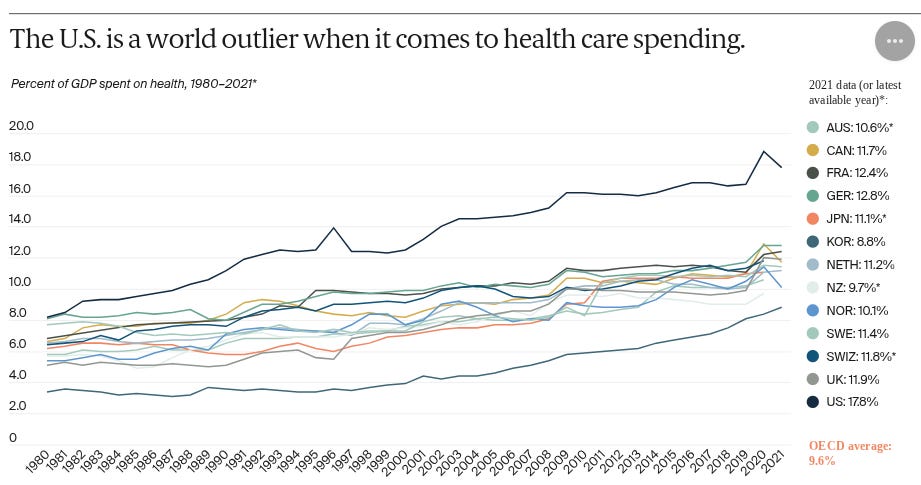
By nearly every meaningful measure, the United States performs worse than peer nations that provide universal healthcare. Americans experience longer wait times, worse outcomes, and shorter lifespans, while paying far more.
Two-thirds of U.S. personal bankruptcies are tied to medical debt
Twenty-seven million Americans are uninsured, a number expected to rise now that affordability subsidies expired
The U.S. ranks around 50th globally in life expectancy
Infant and maternal mortality rates are the worst in the developed world
Americans spend roughly 40 percent more per person on healthcare than the next highest-spending nation, and more than double the OECD average
This is the result of a system designed to extract profit at every step.
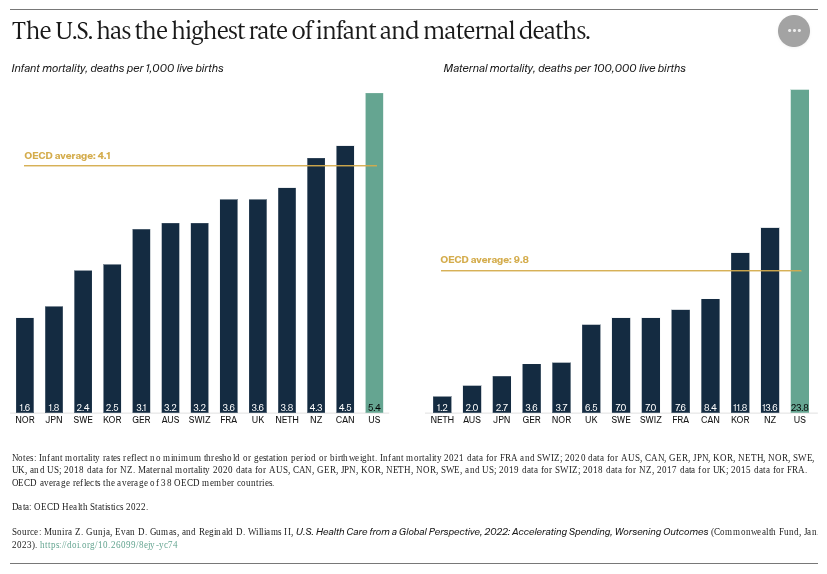
Costs rise because healthcare companies maximize revenue through administrative complexity, claim denials, narrow networks, and opaque pricing. Care is fragmented across insurers, each with its own rules, paperwork, and incentives to delay or deny treatment.
The result is the worst of all worlds: higher costs, worse health, and millions without care.
The Solution
There is a reason every other developed nation has implemented universal healthcare.
It works.
Universal healthcare is not one specific system. Single-payer is one model, used in countries like Canada and the United Kingdom. Multipayer systems, like those in Germany and Japan, rely on tightly regulated insurers with standardized benefits and centralized administration.
Both approaches deliver better outcomes than the American system because they share the same core features:
Universal coverage
Price negotiation
Care based on medical need, not profit incentives
Simplified administration
In the U.S., administrative costs consume a far larger share of healthcare spending than in other nations. Universal systems dramatically reduce this waste by standardizing billing and claims processing. Even multipayer systems route claims through centralized platforms to eliminate inefficiency.
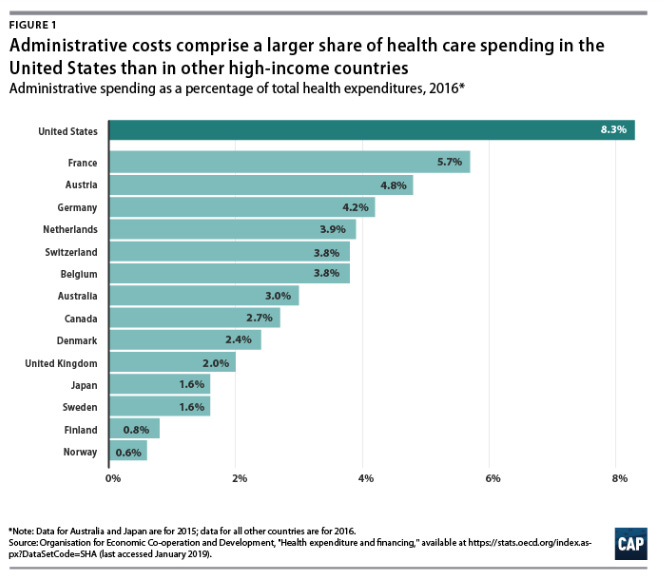
Administration is only part of the problem.
Medical services themselves cost far more in the U.S. Inpatient and outpatient care costs over $8,000 per person annually, compared to under $3,600 in peer nations. A bypass surgery costs roughly $75,000 in the U.S., compared with $42,000 in Australia. MRIs cost several times more. Knee replacements routinely cost tens of thousands more.
Universal healthcare works because governments negotiate prices on behalf of the public. Providers still earn profits, but not through unchecked price inflation. Care becomes predictable, efficient, and affordable.
The Economic Case
Universal healthcare would save the United States hundreds of billions of dollars each year while improving outcomes and reducing wait times. It would also unlock another economic benefit that rarely receives enough attention.
When healthcare is tied to employment, workers stay trapped in jobs they cannot leave. Universal healthcare allows people to change careers, start businesses, retrain, or retire without fear of losing coverage. Entrepreneurship rises. Productivity improves. Even wages increase.
Healthcare becomes a shared public good instead of a personal liability.
When we can honestly say that universal healthcare would cost less, work better, and make the nation healthier, refusing to implement it is not rational. It is greed and stubbornness.
America does not need to choose between compassion and efficiency.
Healthcare for All delivers both.
https://www.americanprogress.org/article/excess-administrative-costs-burden-u-s-health-care-system/
https://www.pgpf.org/article/why-are-americans-paying-more-for-healthcare/
