

As the illegal war in Iran drags on into its 11th week, the economic effects are becoming painfully clear. Gas prices remain 50% higher than before the war, with the national average at $4.50 a gallon. The latest inflation reading came in at 3.8%, the highest level in three years.
The worst part is that inflation is now rising faster than wages. Real average hourly earnings fell last month, meaning paychecks are buying less. Life is getting more expensive, and Americans are falling behind.
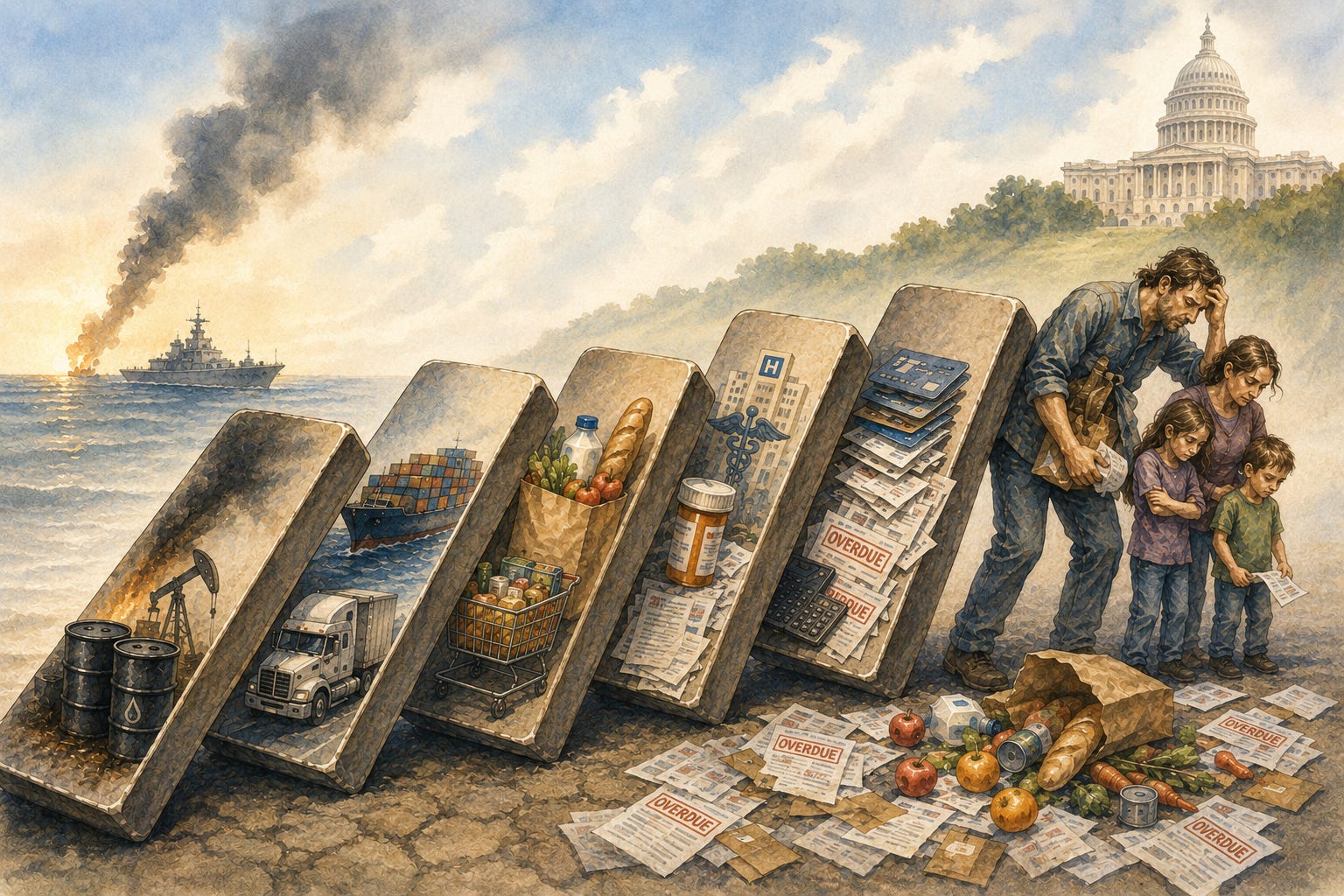
Crude oil production was hit by retaliatory strikes across the Gulf region in the early days of the fighting, and the Strait of Hormuz was closed, disrupting one of the world's most important energy supply routes.
But gas prices were only the beginning.
Higher oil prices mean higher diesel and jet fuel prices. Diesel powers much of the transportation system. It moves raw materials to factories, finished goods to warehouses, and products to stores and consumers. When diesel prices rise, costs rise. Jet fuel has pushed airfare higher as well. The strain is so great that an American airline declared bankruptcy, citing high fuel prices, and immediately ceased operations.
Oil is also used in petrochemicals, plastics, packaging, and countless industrial products. That means the war does not just affect what people pay at the pump. It affects the cost of making and moving the goods people buy every day.
The same pattern is showing up in food. A large amount of fertilizer moves through global shipping routes affected by the war, and higher fertilizer costs are adding pressure on farms. Fruits and vegetables are now up 6.1% over the past year, far above overall inflation.
There are also disruptions that most people never think of. Helium is one of them. With a major share of global supply disrupted, healthcare equipment that relies on helium becomes more expensive to operate and maintain. Most Americans will not see a line item labeled “helium” on a bill, but they will feel it through a healthcare system that is already becoming more expensive as cuts to healthcare subsidies go into effect.
That is the problem with this war. Its costs do not stay on the battlefield. They move through energy, food, transportation, healthcare, and consumer prices. And this is happening in an economy where households were already pushed to the brink with no room to absorb it.
Household debt has climbed to nearly $19 trillion. Credit card balances remain at record highs. Many families were already relying on debt, delayed purchases, and shrinking savings before this latest inflation spike hit.
At the same time, Americans are paying more in taxes while receiving less in return.
A Yale Budget Lab estimate found the average household is paying roughly $1,500 more because of tariffs. Meanwhile, the average tax refund this year only increased by a few hundred dollars. All of the claims that your taxes were being reduced were false. The taxes were shuffled around, and you ended up paying more.
The government is effectively taking more money out of working people’s pockets while reducing services and support. Healthcare subsidies were cut. Food assistance was cut. Affordable housing programs were cut. Environmental and Climate programs were cut. Green Energy funding was cut. Yet despite all of this, the deficit and debt are growing even faster than before due to major tax breaks for the wealthy and tax loopholes for corporations.
The job market is offering no relief. April added 115,000 jobs, but previous months were revised down by 16,000. Job growth in 2026 remains slightly better than last year but far weaker than in 2024. Unemployment has slowly risen, and labor participation rates have decreased. America has the largest share of men not working since 1948, something so few people have been discussing that it has been dubbed “the quiet catastrophe".
The Federal Reserve is now in a worse position, too. When inflation was cooling, rate cuts looked more likely. With inflation rising again, the Fed has less room to cut interest rates and may even raise them. That means higher costs can remain in place for mortgages, credit cards, auto loans, and small businesses. Families are getting squeezed by prices on one side and borrowing costs on the other.
There is also the direct cost of the war itself. The price tag has already risen to around $60 billion. That is more than enough to have covered two more years of federal healthcare subsidies that were cut because we were told America could not afford them.
That is the choice being made.
If the war ended tomorrow, prices would not immediately return to normal. Supply chains take time to repair. Shipping routes have to reopen. Inventories and transportation costs take time to work their way back through the economy. Americans saw this after the pandemic, when disruptions continued affecting prices long after the original crisis passed.
For now, there is no clear end in sight. Congress could end this war today. It has the power to do so. But Congress has refused to use its authority over war, just as it refused to fully confront illegal tariffs that raised prices on consumers.
That is why the midterms matter.
Congress is supposed to represent the public, control spending, and decide when America goes to war. If lawmakers refuse to exercise those responsibilities, voters have the power to replace them with people who will.
November is coming, and it is time to make a change.
