

750,000 are homeless, 27 million lack health insurance, 36 million live in poverty, 42 million rely on federal food assistance, Social Security’s surplus is running out, the nation has racked up $1.2 trillion in credit card debt, and people are resorting to Buy Now, Pay Later loans to buy groceries.
Why is life such a struggle in the wealthiest nation in the world? America’s capitalism has been hijacked to enrich the select few at the expense of everyone else.
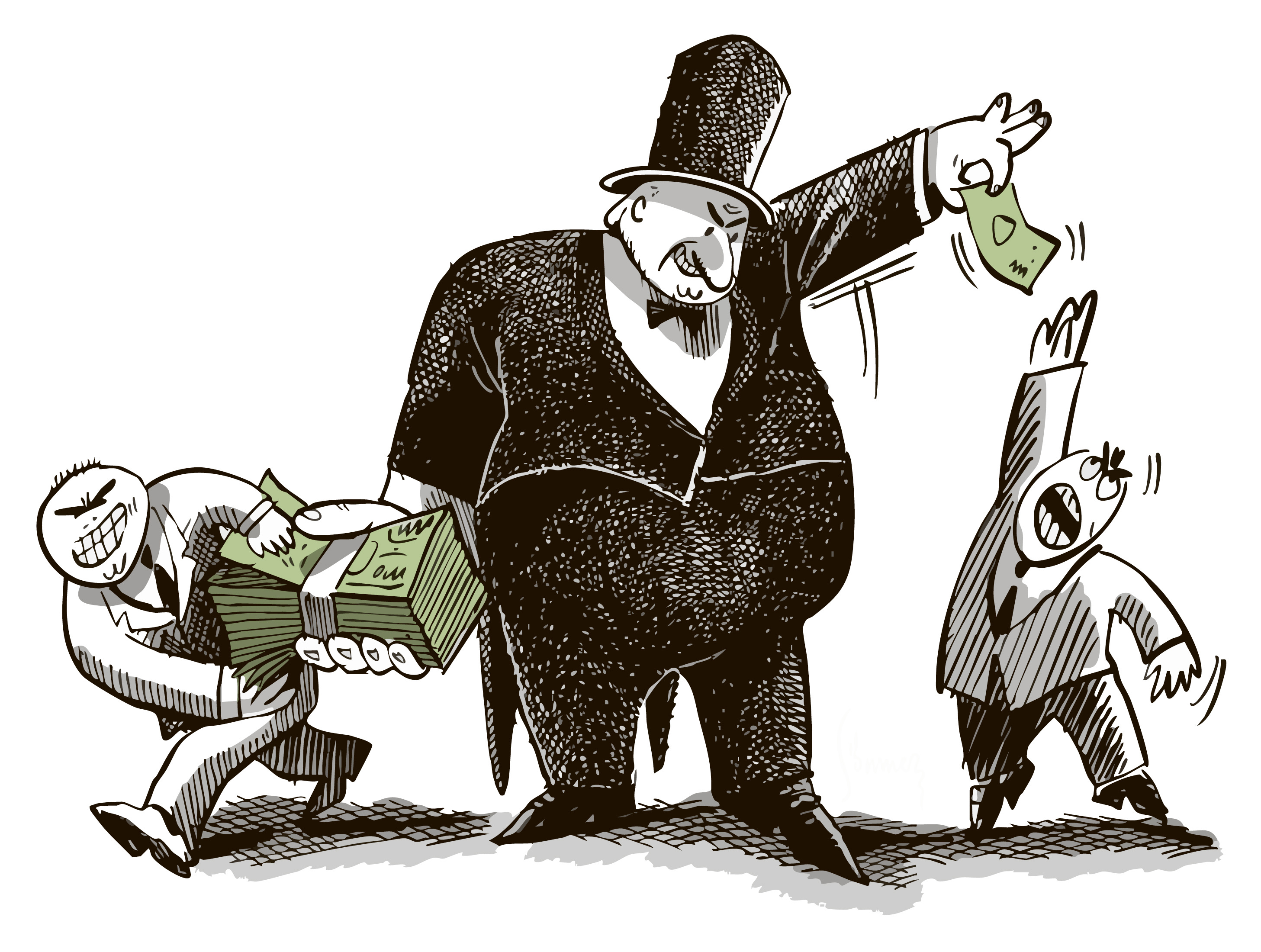
We’ve accepted the idea that the union-busting CEO who earns more in just 15 minutes than his employees will in their entire lifetime is the hero of the American Dream. The workers who are paid so little that they need food assistance to survive are the villains who are righteously told to pick themselves up by their bootstraps and work harder.
Instead of discussing how broken society must be to have full-time workers requiring federal assistance and veterans living on the streets, we complain about how those in need spend the $6 they’re given each day for food and wonder if we can cut it down to $5.
We’ve been conditioned to believe this is normal. That we must toil away for over 40 hours a week, every week, for 50 years, as life passes us by, all so that if we’re frugal enough, if we don’t take vacations, don’t buy nice things, or enjoy ourselves too much, then we just might be able to retire in a small hut without the debt collectors pounding on our door.
Corporations conquered America, and we let them. They use our doubts, insecurities, and fears to distract and divide us. Billionaires bought newspapers, media companies, and social networks to control the narrative, misleading us into believing that our problems aren’t due to their excessive greed but to those who look different, sound different, and pray differently.
What corporations, billionaires, and special interest groups understand is that a divided middle class is easy to control and exploit. If we’re fighting each other, then we aren’t fighting them. We hold each other back, saying that it is wrong to demand a livable wage, because then the corporations might punish us by taking away the scraps they’ve left behind.
The feeling of hopelessness has spread so deeply that one out of every three eligible voters doesn’t cast a ballot. What’s the point, they think, nothing will ever change. Meanwhile, corporations are spending hundreds of millions of dollars every year to lobby politicians because they know whoever controls the politicians controls the policies, the wealth, the power.
That money cannot compete with 170 million voices demanding a government that works for them, but achieving that unity requires us to put aside our minor differences and band together to fight for a better America for all.
You may think that you haven’t been tricked into being against your best interests, that it couldn’t possibly happen to you, so let me ask you:
Do you beg companies and the government to lower prices, or demand that you and every other worker be paid a proper wage?
Do you fight against an increase to the federal minimum wage out of fear of higher prices or the anger that a minimum wage worker may get paid as much as you do? Or do you fight for livable wages, understanding that it increases prosperity and affordability for all?
Do you speak out against universal healthcare because you think it is scary socialism, or will lead to long wait times and worse care? Or do you insist on universal healthcare and explain that our peer nations using it have lower costs, lower wait times, better outcomes, and longer, happier lives?
Do you defend the billionaires against talk of raising their taxes? Or do you realize they pay a lower effective tax rate than teachers, firefighters, farmers, and factory workers, and that America’s middle class was stronger and the national debt far lower when taxes were much higher for corporations and the ultra-rich?
Do you believe the government is meant to be limited and each citizen is meant to fend for themselves? Or do you know that the Constitution says the government is responsible for the general welfare of the nation, not once, but twice, and the Supreme Court has upheld that as a broad power for Congress to tax and spend for national well-being?
This is one of many problems with extreme wealth and income inequality. That wealth is used to control the national talking points through ownership of media and social networks, through huge donations to politicians and super PACs, and even through advertising dollars. When so much of what we watch and read is paid for by advertising, the advertisers get to direct what we see and hear.
We have been lied to for so long that we believe it.
But how do we fix it? The first step is informing others. Break through the misinformation and show people what they deserve, what their government should be doing for them. And when the inevitable question arises: “How do we pay for it?” the answer is: with the budget we already have.
The idea that it is too expensive to take care of people, to ensure basic needs like food, shelter, and healthcare are available to everyone, and to bring prosperity to all, is just another lie. We can do it, and easily. And how do we deal with the nation’s debt? A proper progressive tax rate on the highest earners and corporations.
We have everything we need to make change with one exception, the will of the people to demand it.
“And one day we must ask the question, ‘Why are there forty million poor people in America?’ And when you begin to ask that question, you are raising questions about the economic system, about a broader distribution of wealth. When you ask that question, you begin to question the capitalistic economy. And I’m simply saying that more and more, we’ve got to begin to ask questions about the whole society… an edifice which produces beggars needs restructuring” -Martin Luther King Jr.
Redirect Your Anger

Americans are frustrated at the difficulty of making ends meet. Campaign promises about tackling inflation, lowering prices, mass deporting migrants, and using tariffs to solve our problems likely won one of the closest presidential elections in US history.