

The past year has been tough for American workers. More than a million people have been laid off. Over the past 10 months, the US has lost more jobs than it created. There is no relief on the horizon.
Workers are trapped.
Savings are falling. Credit card debt is at record highs. Hardship withdrawals from retirement accounts are on the rise. For the first time in Gallup’s survey history, struggling workers outnumbered thriving ones.
The problem isn’t just that life has become more expensive. It is that the economy isn’t offering a path to something better. America needs a plan to turn this around.
China faced a version of this problem a decade ago.
By 2015, its economic growth was slowing. Debt was rising. Lower-end manufacturing was moving to even cheaper labor markets. And China depended heavily on imports for critical high-tech components. The model that had powered China’s rise was no longer enough to carry it forward.
China’s leaders recognized that its economy needed to change. Part of the inspiration came from other countries’ efforts to modernize, including Germany’s Industry 4.0 initiative, which aimed to drive a modern industrial revolution. China moved in the same direction, launching the Made in China 2025 initiative.
Its purpose was to shift China away from relying mainly on export-driven industry using low-cost labor and toward innovation, advanced manufacturing, and domestic strength in future-focused technologies. The targeted sectors included robotics, aerospace, electric vehicles, biotech, advanced information technology, rail, and new energy equipment.
A decade later, China is now the world’s largest producer of electric vehicles. It controls a large share of battery supply chains. It dominates solar panel production and has rapidly expanded renewable energy across its own grid. It built the world’s largest high-speed rail network and exports rail and infrastructure systems across the globe. It has also become a major force in industrial robotics and commercial drones.
China still has weaknesses. It relies on foreign components in parts of aerospace and trails the United States in the most advanced microchips. But it made major gains across many of the industries most likely to shape the global economy in the decades ahead.
When a country expands into growing higher-value industries, it creates more room for skilled jobs, stronger supplier networks, and better wages. It generates upward mobility. Workers move into sectors with rising demand rather than being left to compete for shrinking opportunities in industries facing decline.
That is what American workers are missing right now. The United States is facing its own version of this choice, but instead of building a consistent long-term strategy, the government has wasted years on half-measures, trade wars, and political fights over technologies that are moving forward with or without us.
The slogan “drill, drill, drill” has led to a refocusing on fossil fuels at a time when they are becoming the industries of the past. Coal has already declined significantly. Oil demand is declining in advanced economies and will begin declining globally within a few years. Natural gas is expected to plateau soon after. Fossil fuels remain a significant part of the economy, but their importance will fade further with each passing year.
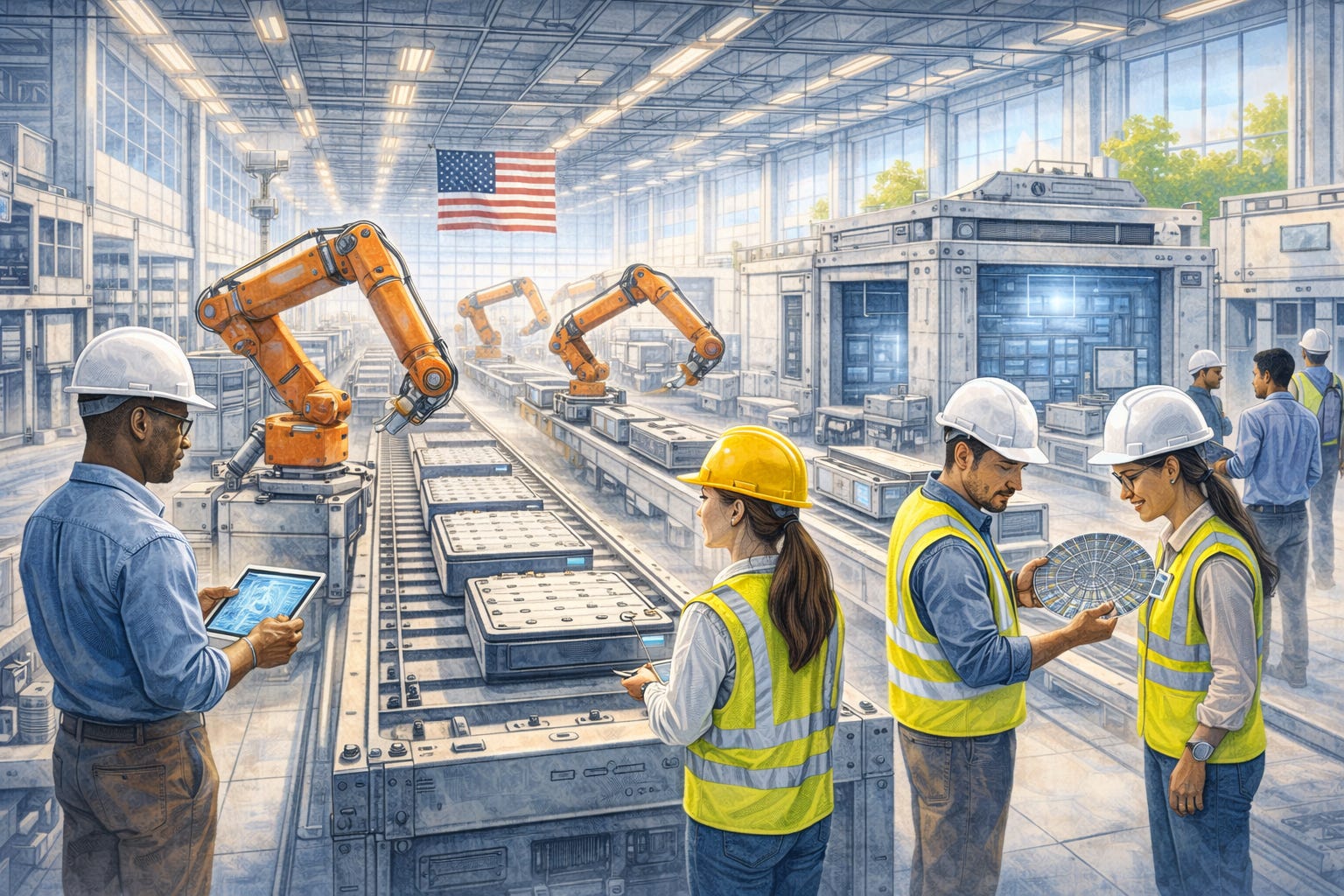
America needs a strategy that is clear, practical, and focused on where the world is headed. That means investment in rare-earth mineral processing, batteries, robotics, advanced manufacturing, renewables, electric vehicles, and biotech. It means rebuilding domestic supplier networks instead of waiting until a crisis exposes how dependent we have become on rivals and adversaries.
These investments also need to survive changes in political power. America had opportunities in solar, and opportunities to move earlier and more aggressively in energy storage and supply chains. Treating electric vehicles, renewable energy, and other emerging industries as partisan symbols does not stop those markets from growing. It simply means more of the jobs, expertise, and production will be elsewhere.
That is why the most important investment is in American workers.
As jobs in older technology continue to decline, newer, better-paying jobs will require different skills, certifications, and training. If America wants workers to move into the future economy, then it has to build the bridge to get there.
Offer free training to workers displaced by industrial change. Expand apprenticeships. Partner with employers and community colleges. Create clear pathways into technical and skilled careers for younger workers trying to find their place and for older workers whose industries are fading beneath them.
Investment in future industries is not just about beating China. It is about whether workers will have access to the kinds of jobs that can support the American Dream.
This requires building an economy that creates new opportunities instead of forcing people to cling to the scraps of the past. It means stronger wages, more resilience, and reducing dependence on the rest of the world for critical technologies. It means choosing to compete in the markets of the future instead of trying to squeeze a few more years out of the past.
The United States still has the talent, capital, and workforce to achieve this. What it lacks is focus. If we want American workers to share in that prosperous future, we need to invest in it.
https://www.gallup.com/workplace/703280/worker-thriving-declines-job-market-pessimism-grows.aspx
Oil Is The Past

Oil built the modern world. It fueled America’s industrial revolution, created the automobile assembly lines, and powered the victories of World Wars I and II. Dominating the oil markets helped grow America’s prosperity and influence on the world stage.